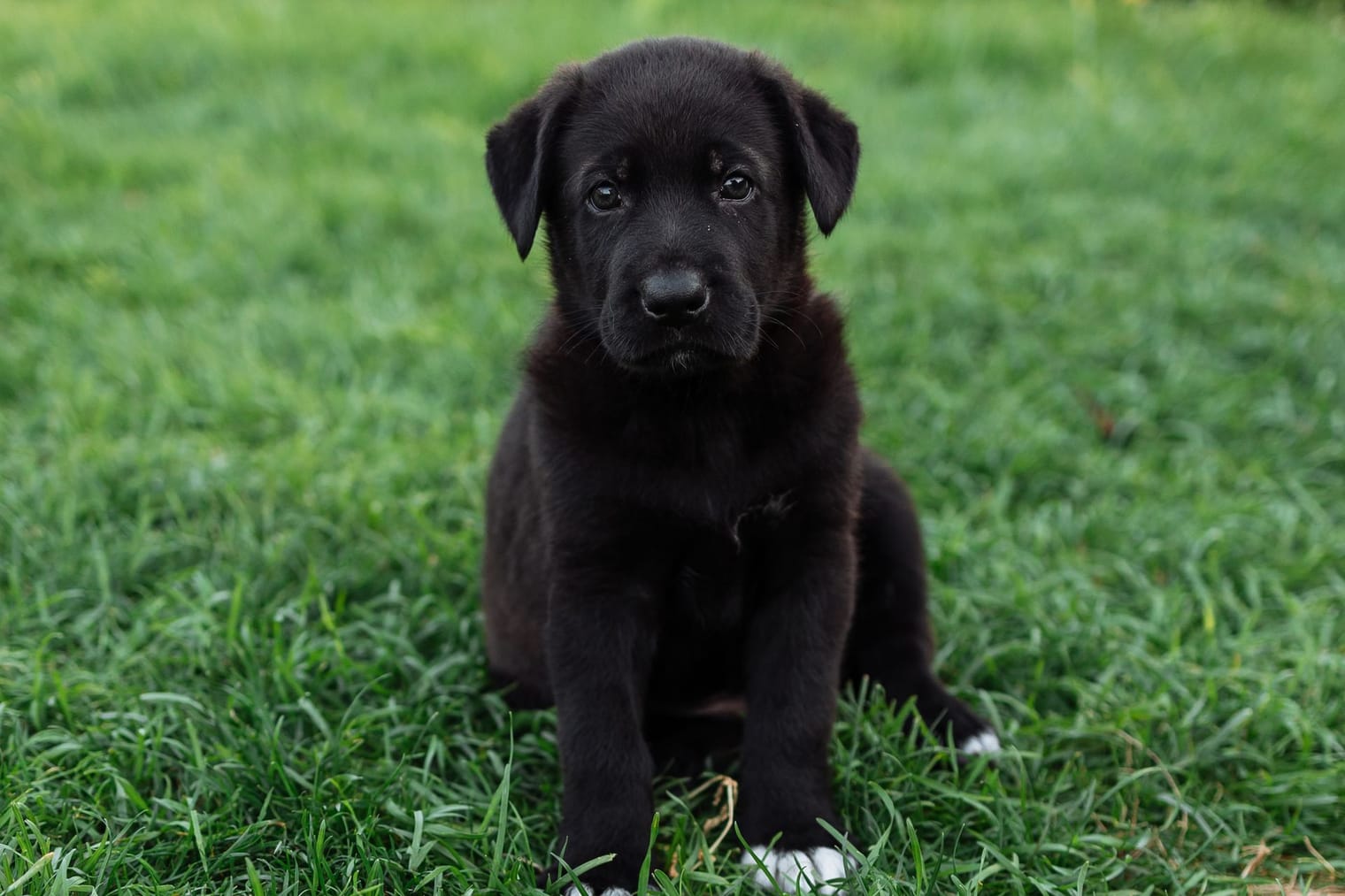
There is no way to know a puppy's exact adult size in advance, and anyone who promises one is guessing. What you can do is estimate it well. The breed sets the ballpark, the parents narrow it down, and your puppy's own weight trend over a few weeks turns a guess into a proper forecast. Here is how to do all three.
The short answer, by size
Breed is the single biggest clue, because size is strongly inherited. As a rough guide, a fully grown dog weighs about:
- Toy and small breeds: 4 to 9kg, like a Chihuahua, Pug or Cavalier King Charles Spaniel.
- Medium breeds: 10 to 25kg, like a Beagle, Cocker Spaniel or Border Collie.
- Large breeds: 25 to 40kg, like a Labrador, Golden Retriever or German Shepherd.
- Giant breeds: over 40kg, like a Great Dane, Rottweiler or Saint Bernard.
If you know the breed, you already have the ballpark. The rest of this guide is about turning that ballpark into a sharper number for your own puppy.
The rule of thumb: double the half-grown weight
The simplest home method uses a single idea: a puppy is roughly half its adult weight at a predictable age, and that age is later for bigger breeds. So weigh your puppy at that point and double it:
- Small breeds: double the weight at about 4 months.
- Medium breeds: double the weight at about 4.5 months.
- Large breeds: double the weight at about 5 months.
- Giant breeds: double the weight at about 6 months, and expect them to carry on growing until 18 to 24 months.
Treat this as a ballpark, not a promise. A single weigh-in on a slightly heavy or light day can throw it off by a fair margin, and it says nothing about whether your puppy is tracking high or low for its breed. It is a starting point, not the finished answer.
What actually predicts adult size
Beyond the breed, three signals do the real work, roughly in order of how much they tell you:
- The parents' size. If you know how big the mother and father are, your puppy will most likely finish somewhere between them. A puppy notably bigger than both parents is uncommon.
- The weight trend over time. This is the strongest signal of all, because it is about your dog specifically. A run of weigh-ins shows whether the puppy is tracking the top, middle or bottom of its breed's range, which a one-off measurement cannot.
- Paws and frame. Big paws and a lanky, leggy look are a loose sign there is still growing to come. Useful as a rough clue, unreliable as a number.
The paw-size myth, and other shortcuts
Big paws are the most repeated shortcut, and they only loosely work. Oversized feet suggest a puppy is not finished growing, but plenty of dogs have chunky or dainty paws that never matched their final size. It is a hint, not a measurement. The same goes for online formulas that multiply the current weight by a fixed number regardless of age or breed: they can be wildly out for a two-month-old, whose weight barely predicts the adult at all. The more of your puppy's actual growth you can see, the sharper any estimate becomes.
Mixed breed? How to estimate
Mixed-breed puppies are harder to call because you cannot look up a single breed range, but the same signals still work. Start with the parents if you know them, since the adult size usually lands between the two. A DNA test can identify the breed mix and give a broad adult-weight range, though it cannot promise an exact final weight, two dogs with the same result can still finish at different sizes. When the parentage is unknown, the weight trend over the first few months becomes your best guide, and the adult size almost always falls within the range of the breeds involved.
Why a weight trend beats a single guess
Every method above has the same weakness: it rests on one number or one assumption. A puppy's own weight trend fixes most of that. Plotting several weigh-ins against a breed-appropriate growth curve shows which part of the range your dog is heading for, and the estimate tightens with every reading rather than staying a shot in the dark. Early on the honest answer is a wide range, and that is fine, it narrows naturally as your puppy grows and the trend becomes clear.
Even then it is an estimate, never a guarantee. Genetics, neutering, health and body condition all nudge the final figure, and weight on its own cannot tell a lean, big-framed puppy from one simply carrying a little extra, which is why a hands-on body-condition check matters alongside the scales. Treat any adult-size prediction as a well-informed range, not a fixed number.
Want the fuller picture? Our guide to when puppies stop growing covers the timeline, our puppy weight chart guide shows what a healthy weight looks like along the way, and the puppy feeding calculator works out portions from your puppy's weight and age.
When to call the vet
Predicting adult size is not a health check, but the weight trend that powers it is a useful early-warning sign. It is worth a call to your vet if your puppy is not gaining weight, or is losing it, while still actively growing, if the growth pattern changes suddenly rather than gradually, or if you are worried a large-breed puppy is growing too fast, since pushing big breeds to grow quickly is hard on developing joints. A puppy who falls off their own growth line can be showing the first sign of a problem, and it is always better to check early.
Vivlo forecasts adult size for you. Log weigh-ins and Vivlo plots your puppy against a breed-appropriate curve and gives an adult-weight forecast as a likely range that sharpens with every weigh-in. It stays a forecast, not a promise, but it beats a paw-size guess, and it nudges you to see your vet if the line ever dips.
See how it worksCommon questions
How big will my puppy get?
It depends most on the breed, then the size of the parents, then your puppy's own weight trend. As a rough guide, small breeds finish around 4 to 9kg, medium breeds 10 to 25kg, large breeds 25 to 40kg and giant breeds over 40kg. The sharpest estimate comes from tracking weigh-ins against a breed-appropriate curve over several weeks.
How can I predict my puppy's adult weight?
The most reliable method is to plot your puppy's weigh-ins over several weeks against a breed growth curve, so the estimate leans on your own dog's trend rather than a one-off guess. As a ballpark, double the weight at the age your puppy is roughly half grown: about 4 months for small breeds and 5 to 6 months for large and giant ones.
Do big paws mean a big dog?
Loosely. Oversized paws suggest a puppy still has growing to do, but they are not an exact predictor of final size. The breed and the weight trend are far more reliable.
Is there a formula to work out a puppy's adult weight?
A common rough formula is to double your puppy's weight at the age they are about half grown: roughly 4 months for small breeds, and 5 to 6 months for large and giant breeds, which finish much later. It is only a ballpark and can be out by a fair margin, so a tracked weight trend is far sharper.
How can I tell how big a mixed-breed puppy will get?
Use the parents' sizes if you know them, since a puppy usually lands somewhere between the two. A DNA test can estimate the breed mix and a broad adult-weight range. Otherwise the weight trend over time is your best guide, and the adult size usually falls within the range of the breeds involved.
Are puppy DNA tests accurate for predicting size?
They are good at identifying the breed mix and giving a broad adult-weight range, but they cannot predict an exact final weight. Two dogs with the same DNA result can still finish at different sizes. Treat the range as a guide, not a guarantee.
Will my puppy be bigger than its parents?
Usually a puppy grows up a similar size to its parents, most often landing between the two. A puppy that ends up notably bigger than both parents is uncommon, so the parents' size is one of the best clues you have.