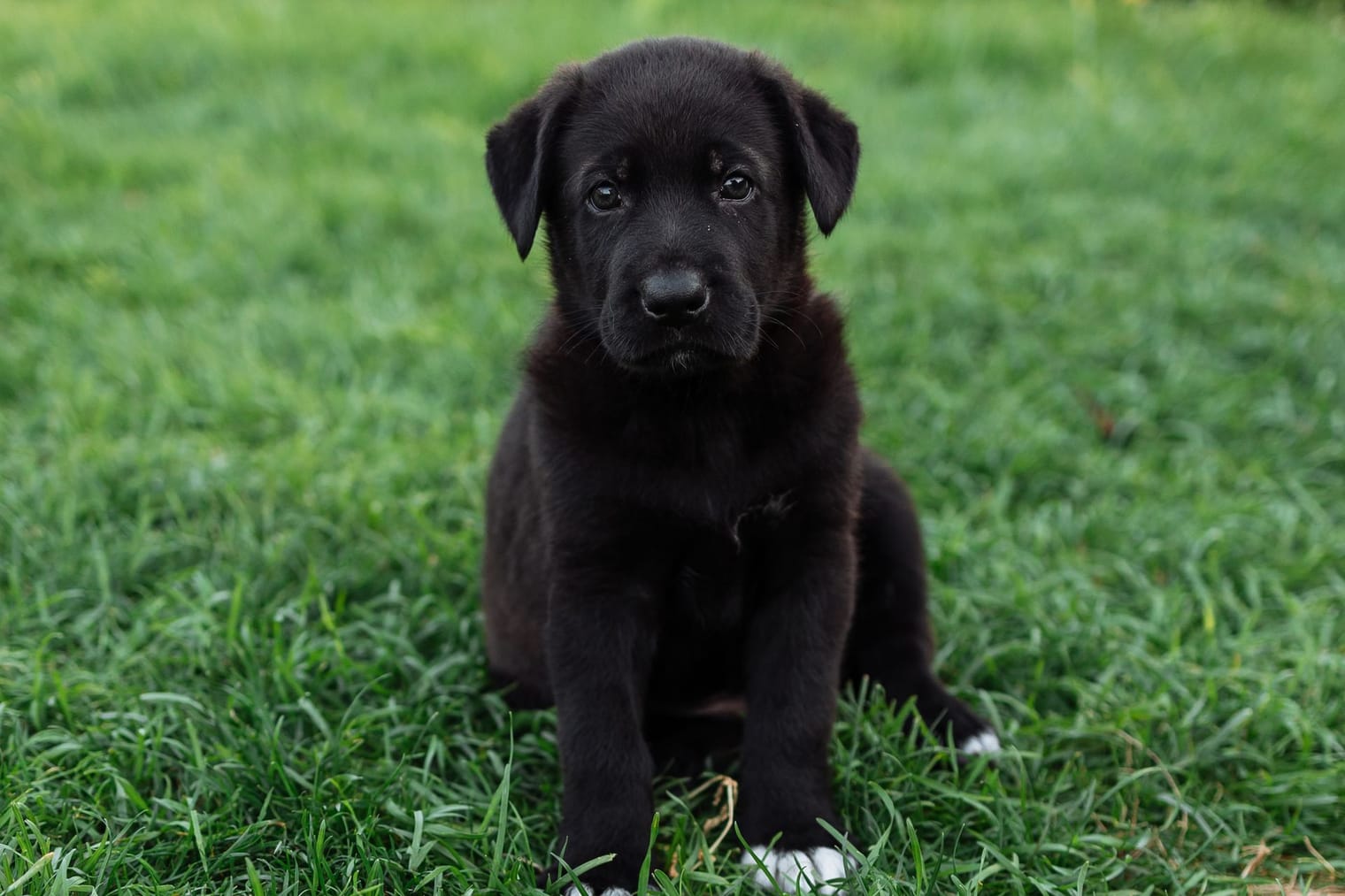
Most puppies reach their adult height by around their first birthday, but the full picture depends on size. Small breeds finish first, giant breeds keep growing for up to two years, and weight carries on filling in for a while after height stops. Growth happens from the top down: height first, then the body fills out.
The short answer, by size
Size is the single biggest factor in how long growth takes. As a rough guide, a puppy reaches its adult size at:
- Toy and small breeds (under 10kg), like a Chihuahua or Yorkshire Terrier: about 8 to 12 months.
- Medium breeds (10 to 25kg), like a Cocker Spaniel or Beagle: about 10 to 14 months.
- Large breeds (25 to 40kg), like a Labrador or German Shepherd: about 12 to 18 months.
- Giant breeds (over 40kg), like a Great Dane or St Bernard: 18 to 24 months.
Height usually finishes before weight. Even once a puppy stops getting taller, muscle and chest keep filling out for a few more months, which is why a young adult dog can look leggy before it settles into its final shape.
The puppy growth stages
Growth is not steady. It comes in bursts and pauses, and the pace changes as the puppy gets older:
- 8 to 16 weeks: the fastest growth of their whole life, and the key socialisation window. Puppies change almost by the day.
- 4 to 6 months: still growing quickly, and the adult teeth come through. Appetite is high because the body is building fast.
- 6 to 12 months: growth slows and adolescence begins. Puppies look taller and gawkier, and their behaviour often gets more testing before it settles.
- 12 months and beyond: small and medium breeds are about done, while large and giant breeds keep filling out, slowly, for many more months.
How to tell your puppy is still growing
You do not need an X-ray to get a good sense of where your puppy is. The clearest signs are:
- Big paws for the body. Oversized feet are a rough sign there is still growing to come.
- The weight is still climbing. Steady weekly gains that are only just starting to level off mean the puppy is not finished.
- A lanky, leggy look. Adolescent dogs often look tall and narrow before they fill out.
Growth has finished when the weekly gains flatten to almost nothing and the weight settles. Tracking weigh-ins over time makes that moment obvious, in a way that a single number on the scales never can.
Why big breeds take longer, and why it matters
Bones grow at soft areas near their ends called growth plates. While these are open, the bone is still lengthening; when they harden and close, growth is done. In small breeds that happens at around 8 to 11 months, and in large and giant breeds much later, often not until 18 to 24 months.
Bigger dogs have far more growing to do, and their bodies do it slowly on purpose. Pushing a large-breed puppy to grow too fast, usually by overfeeding, raises the risk of joint and bone problems while those plates are still open. Steady, unhurried growth is healthier than a fast spurt, which is exactly why large-breed puppy foods and careful portioning exist.
Not sure how much to feed while all this is going on? Our puppy feeding calculator works it out from your puppy's weight and age, and our puppy weight chart guide covers what a healthy weight looks like along the way.
What is normal, and when to call the vet
Growth in spurts and pauses is normal. So is a gawky adolescent phase, and weight still creeping up for months after your puppy has stopped getting taller. One quiet week of no gain is nothing to worry about.
It is worth a call to your vet if your puppy is not gaining weight, or is losing it, while still actively growing, if the growth pattern changes suddenly rather than gradually, or if you are worried a large-breed puppy is growing too fast. A puppy who falls off their own growth line can be showing the first sign of a health problem, and it is always better to check early.
Vivlo tracks the whole curve for you. Log weigh-ins and Vivlo plots your puppy against a breed-appropriate curve, shows when growth is leveling off, and gives an adult-weight forecast that sharpens with every weigh-in, plus a nudge to see your vet if the line ever dips.
See how it worksCommon questions
When do puppies stop growing?
Most puppies reach their adult height by around their first birthday, but it depends on size. Small breeds finish at about 8 to 12 months, medium breeds 10 to 14 months, large breeds 12 to 18 months, and giant breeds keep growing until 18 to 24 months. Weight usually keeps filling in for a while after height stops.
Do puppies keep growing after 6 months?
Yes. Growth slows after six months but does not stop, especially in larger breeds. Small dogs are close to full size by then, while large and giant breeds have several more months of growing to do.
How can I tell how big my puppy will get?
The best guides are the breed, the size of the parents, and the puppy's own weight trend over time. Big paws relative to the body are a rough sign there is still growing to do. Tracking weigh-ins against a breed curve gives a sharper adult-weight estimate than any single measurement.
Do big paws mean a big dog?
Loosely. Oversized paws suggest a puppy still has growing to do, but they are not an exact predictor of final size. The breed and the weight trend are far more reliable.
Why is my large-breed puppy still growing at a year old?
That is completely normal. Large and giant breeds have more growing to do and do it more slowly, with their growth plates closing later, often between 12 and 24 months. Slow, steady growth is healthier for their joints than a fast spurt.
Does neutering affect a puppy's growth?
It can. Neutering before the growth plates close can delay their closure slightly, which can make a dog a little taller. The right timing depends on breed and sex and is a conversation for your vet.
My puppy has stopped gaining weight, is that normal?
If your puppy is near adult size, a plateau is normal and expected. If they are still young and actively growing, a stall or a drop in weight is worth a call to your vet to rule out a health issue.